
Have you ever produced content or launched a comprehensive marketing campaign only to receive a lackluster or even silent response? The fact that you don’t truly “know” your target audience may be one of the causes. In marketing, knowing who your target market is, is the cornerstone of a more successful approach. Let’s discuss the first actions to help you connect with possible customers or product users!
1. Get to know your product or service in depth
It is important to know more deeply about the background of a product being launched. This can make you understand more about customers, such as what they need or dream of. You can use the SWOT method to do this step. Here are some questions you should know the answers to:
• What are the benefits of the product being made?
• What solutions are offered to customers of this product?
• What is the added value of this product compared to competitors?
2. Do Market Research
Apart from getting to know more about the product, you also need to get to know potential customers and competitors through market research. This step is very important to get a suitable picture of potential customers. Here are some steps:
• Survey or interview: This step is to collect data related to what potential customers expect from a product/service. You can use quantitative surveys in the form of filling out forms or direct interviews/discussions for more in-depth results.
• Competitor analysis: This step is to find out who your competitors are, what their strengths and weaknesses are, and who their customers are. You can also use surveys/interviews to conduct competitor analysis. Apart from that, you can also analyze by directly experiencing the products/services they offer.
• Analytical tools: In this digital era, many tools can be used to find out the competitors you are looking for, an example is Semrush. By using analytical tools, you can get an overview of competitors’ customers.
3. Identify Demographic Characteristics
This identification is very helpful for directing your potential customers to more relevant ones. Here are some examples:
• Age: to determine what age is appropriate to use your product/service
• Gender: to determine whether your product can be used by all genders or only certain genders
• Location: to determine where potential customers are located, so you can market them more accurately.
• Education and occupation: to determine what kind of potential customers are suitable for your product/service
4. Understand Psychographics and Behavior
Apart from demographics, psychographics, and behavior are also important in determining the target audience. This includes:
• Lifestyle: to find out what they do every day and in their free time
• Value and trust: to find out what value they see when buying a product
• Shopping habits: to find out how they buy a product, what they consider, and how often they buy it
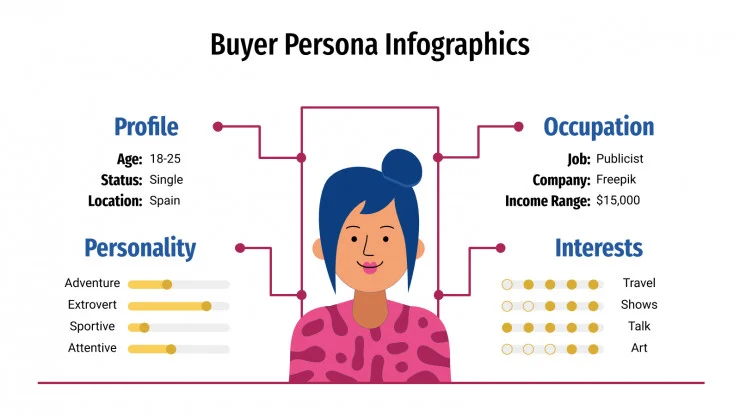
5. Create a Buyer Persona
Buyer persona is a step in collecting previously obtained information, such as biodata, demographics, psychographics, and shopping habits. This step will make it easier for you before carrying out a marketing campaign. Collect this and relevant information into one section.
6. Test and Analyze Your Target Audience
After all the potential customer data has been collected and analyzed, start testing the campaign. The results of these campaigns help to validate customers more accurately. The following is an analysis that must be followed up:
• Is the audience’s response to the product as expected?
• Are there any new customer segments while testing the campaign?
7. Optimize and Adjust Regularly
Determining the target audience is not only about who buys the product but also requires optimization afterward. Over time, the target audience can change considering the incessant development of trends and changes in consumer behavior. Therefore, there is a need for evaluation after the sale is carried out.
Read More : Long Tail vs Short Tail Keywords, Which One is the Better?